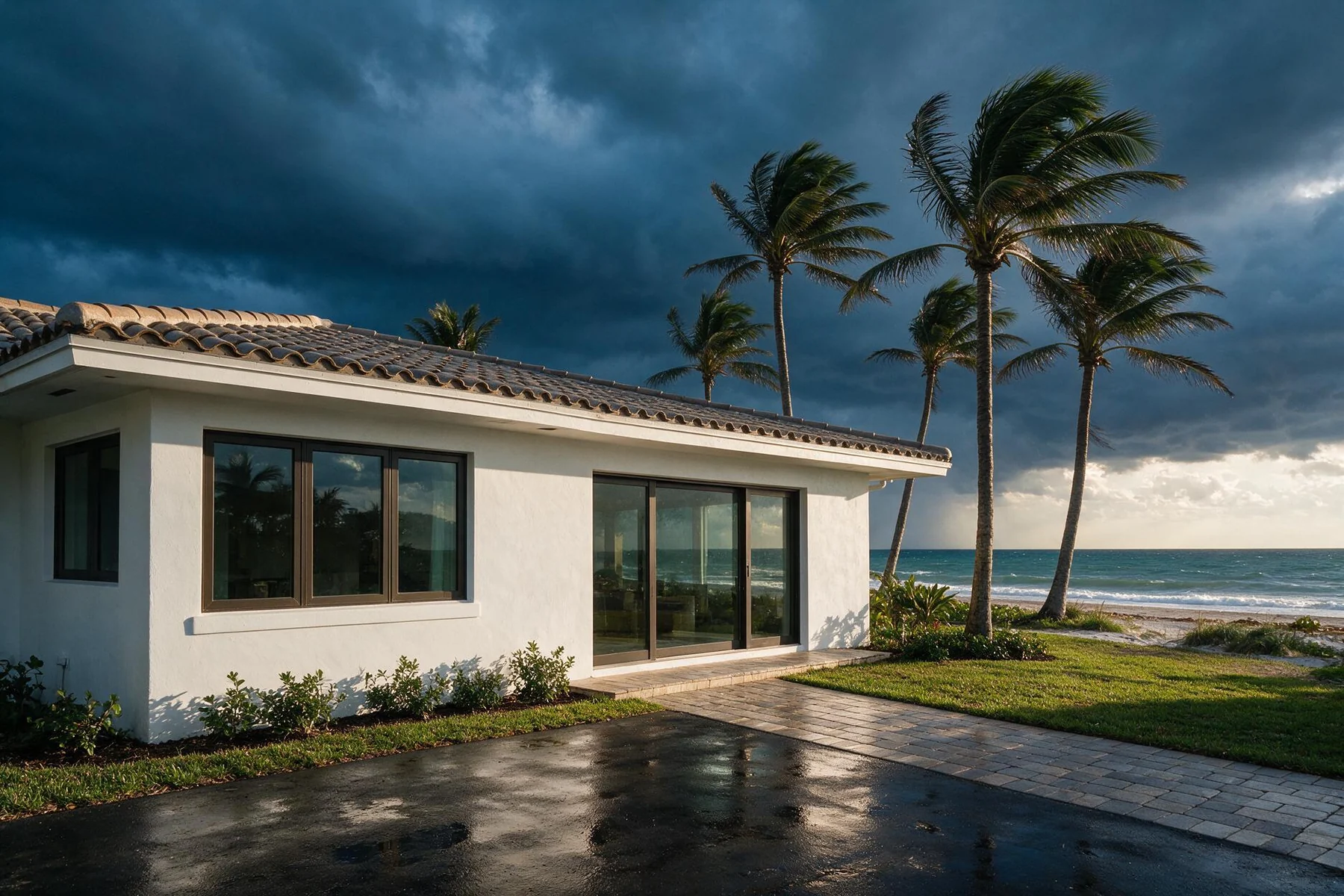

When Palm Beach County homeowners start planning hurricane protection, the first question is usually whether to install impact windows or keep using hurricane shutters.
Both belong in a real storm plan. The better choice depends on the house, the condition of the existing openings, the budget, what the homeowner can physically handle and how much convenience matters the rest of the year.
The wrong way to decide is to assume one option is automatically right for every property.
Here is a practical comparison. If you are still working out how impact glass behaves in a storm, start with how impact windows protect Palm Beach County homes.
What are impact windows?
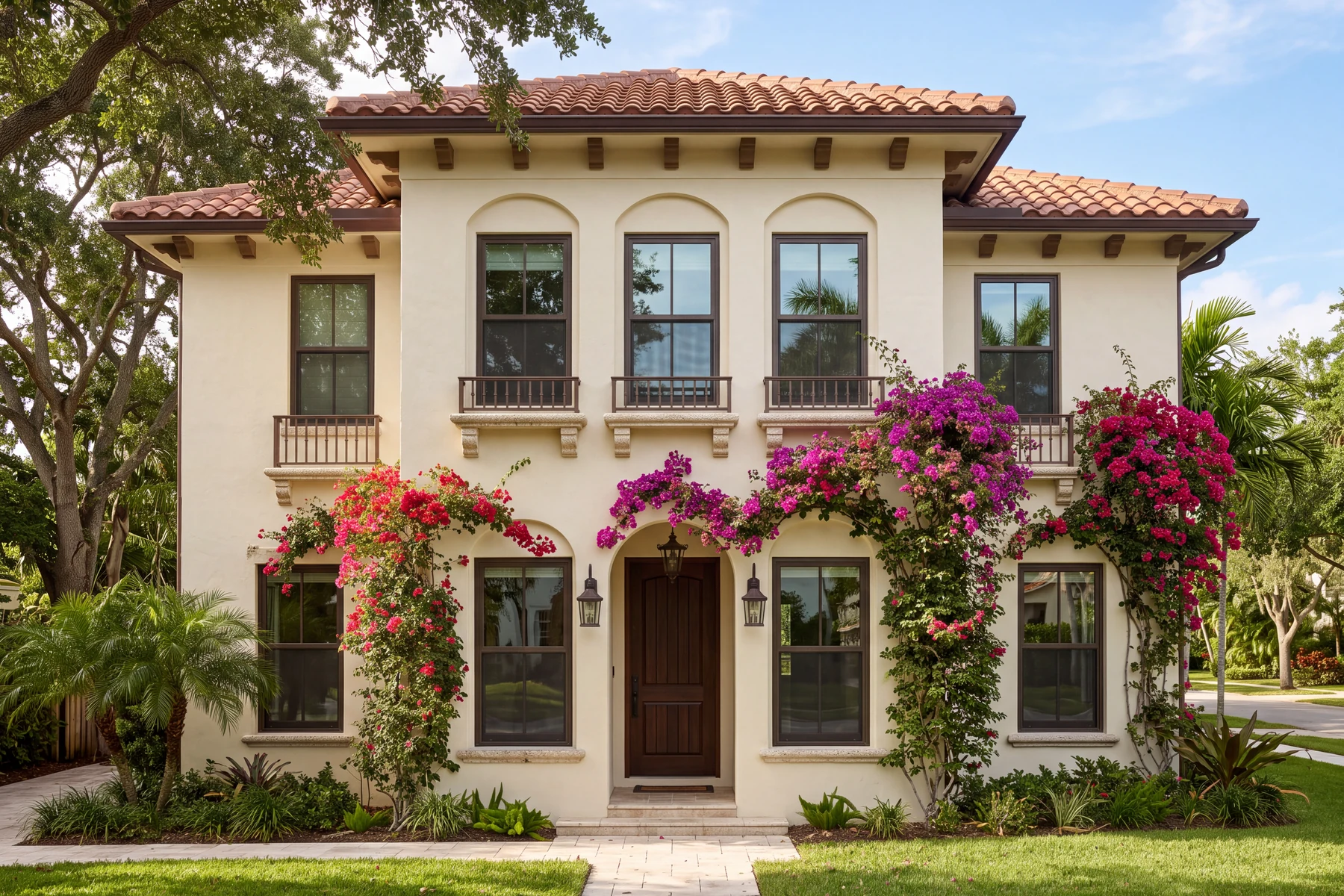
Impact windows are permanent window systems designed and tested to resist wind pressure and debris impact under defined conditions.
They normally use laminated glass inside a reinforced frame. If the glass is struck hard enough it can crack, and the bonded interlayer is there to keep the opening covered.
They have to be judged as complete assemblies. The glass, the frame, the hardware, the anchors and the installation method all decide how the product performs.
Florida’s product approval system lets homeowners and professionals look up approved windows and doors and review impact resistance, approved areas of use and design pressure limits.
What are hurricane shutters?
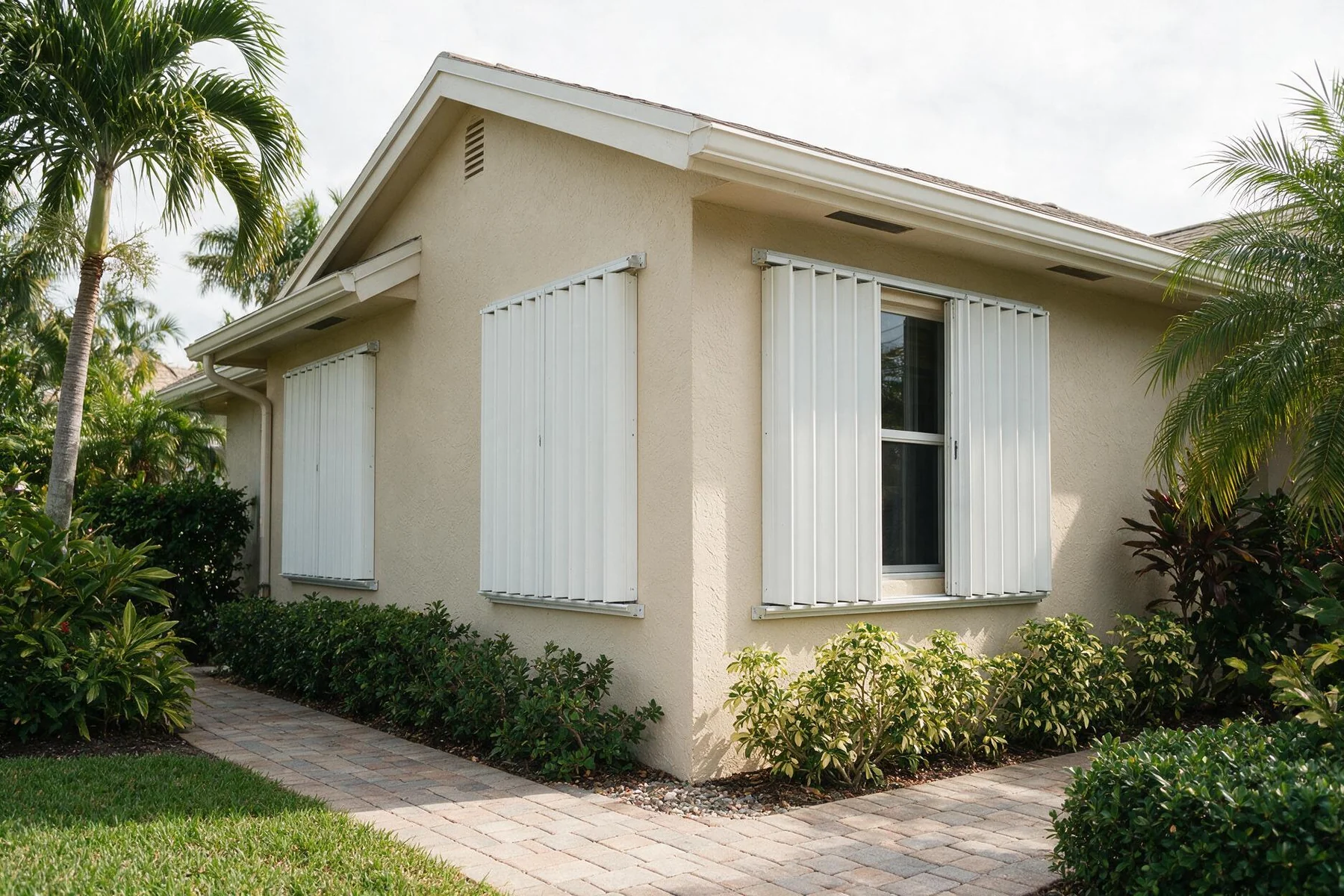
Hurricane shutters are protective coverings installed over windows and doors before a storm. Common options include:
- Accordion shutters
- Roll down shutters
- Storm panels
- Colonial shutters
- Bahama shutters
- Approved fabric systems
Some stay permanently attached to the building. Others have to be stored and put up by hand when a storm approaches.
Palm Beach County hurricane planning guidance covers storm preparation and includes information about hurricane shutters as part of protecting homes and businesses.
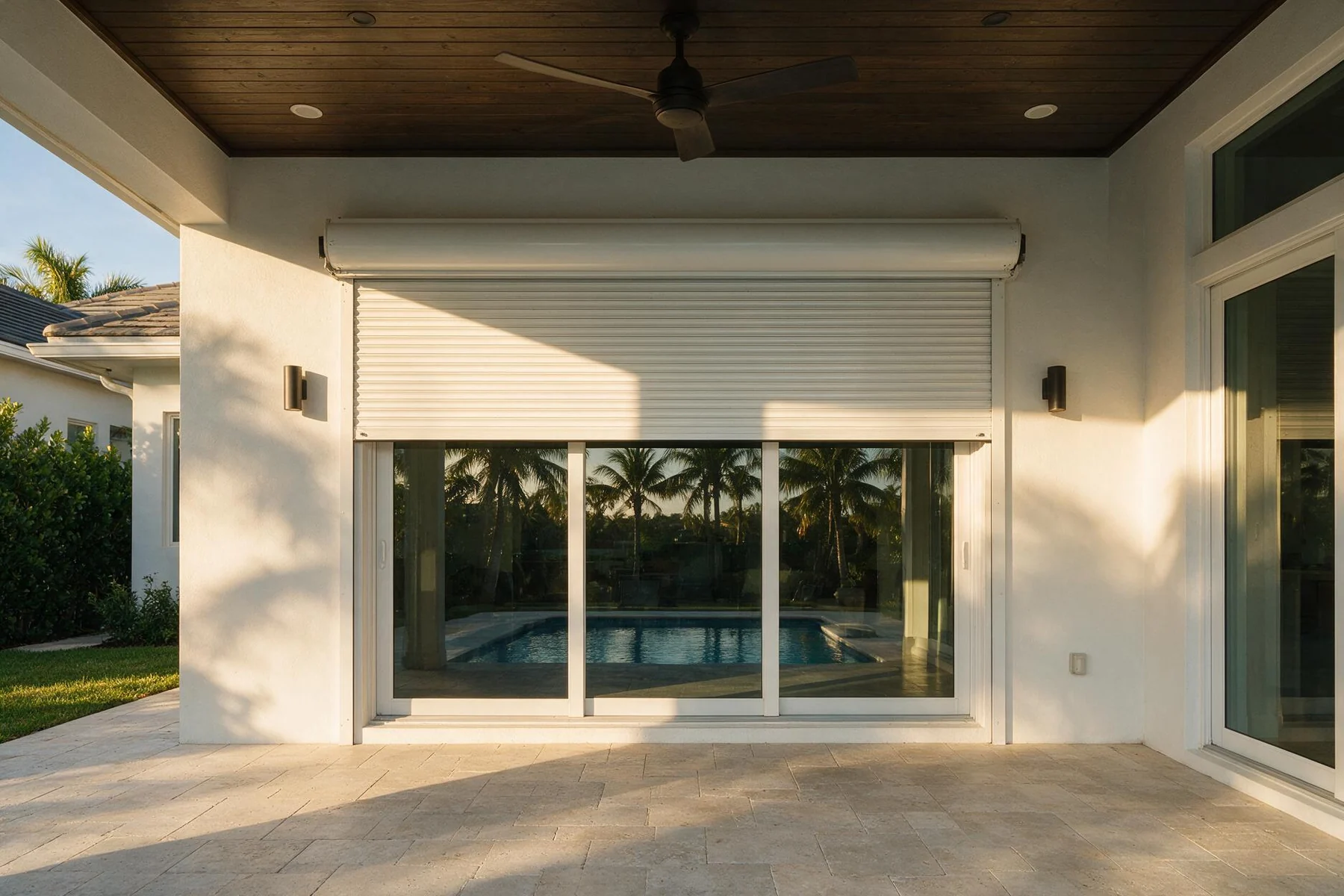
Protection: both have to be approved and installed correctly
Neither an impact window nor a shutter should be judged by how it looks.
The product needs the right documentation for its intended use, and it has to be installed the way the approval says.
For impact windows, that means checking:
- The complete window assembly
- Impact resistance classification
- Design pressure requirements
- Approved installation details
- Opening size limitations
- Attachment to the structure
For shutters, that means checking:
- The shutter or panel system
- Approved span and attachment spacing
- Track or anchor installation
- Fastener condition
- Proper coverage of the opening
- Whether the homeowner can deploy the system correctly
A product that is approved but installed incorrectly may not perform the way the paperwork says it will.
Miami-Dade County also keeps a Product Control database for building envelope products, including windows, exterior glazing, doors and shutters. Read the approval document carefully, because products carry specific conditions and limitations.
Convenience: impact windows have the advantage
Impact windows are passive protection. They are already in place when a storm forms.
Nobody has to:
- Carry panels out of storage
- Find the right hardware
- Climb ladders
- Drill into the building
- Cover the house while the weather is turning
- Come back after the storm to take the protection down
That matters most for older homeowners, seasonal residents and anyone who cannot safely put up shutters without help.
Shutters need active preparation. Even permanently mounted accordion and roll down systems have to be closed and secured, and removable panels are considerably more work.
A protection system is only useful when it actually gets deployed.
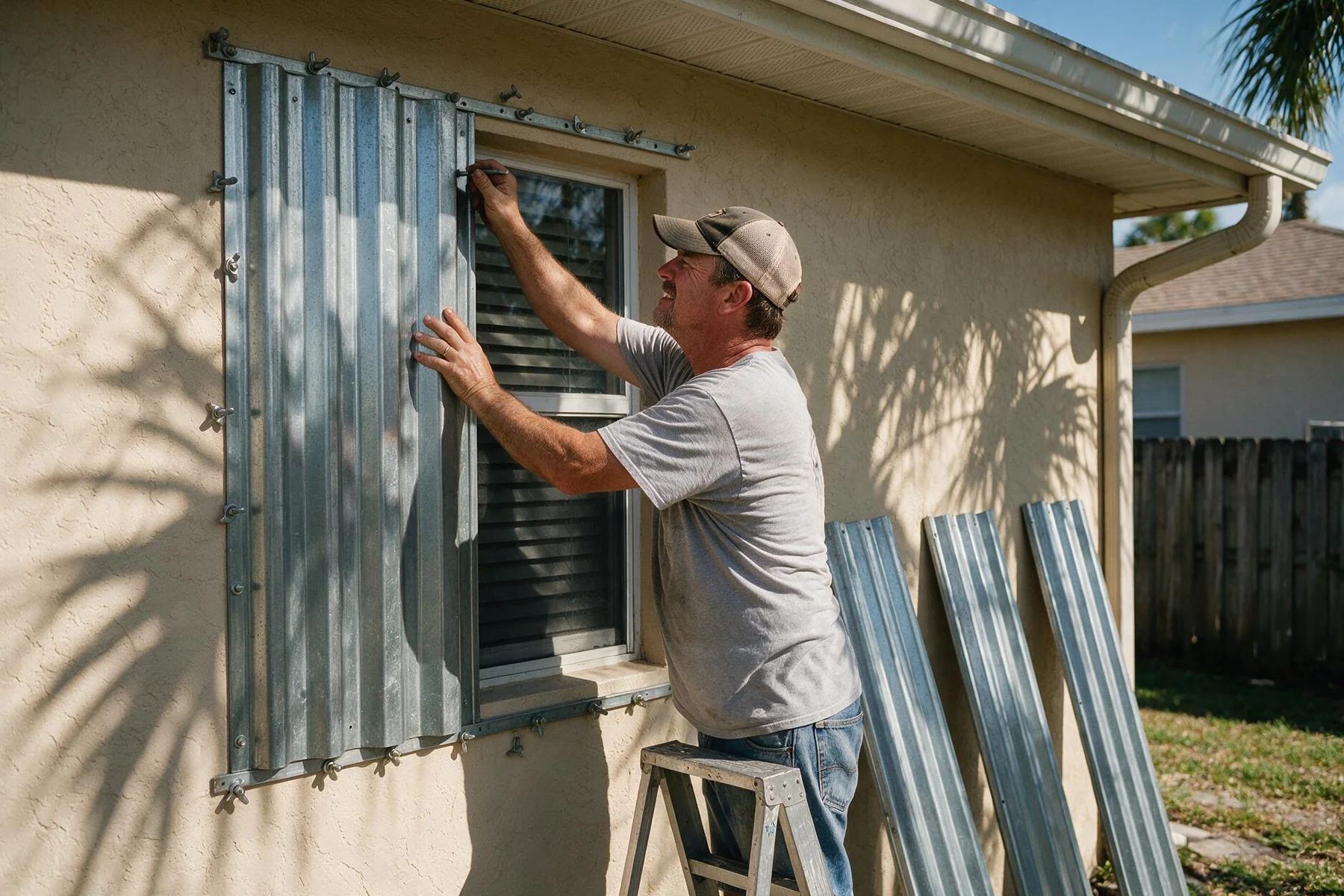
Cost: shutters usually cost less up front
Shutters normally cost less at the start than replacing every window and door with impact rated products.
If the existing windows are still in good condition, approved shutters can be a more affordable path to storm protection.
Impact windows are a larger investment because the project replaces the window assemblies themselves. The budget also has to cover:
- Removal and disposal
- Opening preparation
- Permitting
- Installation
- Interior and exterior finishing
- Upgrades to sliding glass doors or entry doors
A lower starting price is not automatically the lowest long term cost. Weigh maintenance, storage, the labor of putting panels up and whether the existing windows will need replacing anyway for age, leakage or efficiency.
Appearance and natural light
Impact windows keep the normal appearance of the house before, during and after storm preparation.
The natural light and the view stay the same, because no panels go over the openings.
Some shutters also preserve the look of the house when they are open, but removable storm panels make the interior dark while they are up, and accordion shutters stay visible beside the openings all year.
Appearance is subjective, and it matters more in communities with architectural or homeowners association requirements.
Before selecting any exterior system, verify whether approval from a condominium association or homeowners association is required.
Maintenance
Both options need maintenance. Neither one is something you install and forget about.
Impact window maintenance
- Cleaning tracks and frames
- Inspecting weather seals
- Checking locks and hardware
- Watching for water intrusion
- Monitoring frame or fastener corrosion
- Repairing damaged components
Shutter maintenance
- Lubricating tracks and moving parts
- Testing the system before hurricane season
- Replacing missing anchors or hardware
- Removing corrosion
- Confirming that every panel is labeled and accounted for
- Keeping storage areas dry and organized
Shutters should not sit untouched for years and then get tested for the first time when a hurricane warning is issued.
Security and everyday use
Impact windows are in place every day, so they can add a barrier against forced entry and accidental glass breakage.
Shutters only protect when they are closed or installed, and most homeowners do not keep them deployed during normal weather.
Impact products may also offer better sound reduction, ultraviolet protection and energy performance than older single pane windows. The actual benefit depends on the product and the glass configuration, so ask for the supporting documentation instead of relying on broad claims.
What happens if impact glass cracks?
Impact resistant glass can crack when it is struck.
The purpose of laminated impact glass is to hold the broken glass together and keep the opening covered. A cracked unit should be evaluated by a professional and may need to be replaced.
Impact resistant does not mean indestructible. That is one of the most important expectations to set before buying.
What happens if a shutter cannot be put up?
A shutter system depends on preparation. The failure points are predictable:
- Missing panels
- Corroded anchors
- Damaged tracks
- Lost hardware
- Panels that no longer fit
- Not being physically able to install them
- Being away from the property when a storm approaches
Homeowners who choose shutters should practice deploying the system before hurricane season, and should have a clear plan for who puts the protection up if they are not there.
Can a home use both?
Yes, and plenty do.
A homeowner might install impact windows in the areas the family uses most and protect less accessible openings with approved shutters. Another might replace windows in phases and keep shutters on whatever is left.
Large openings deserve their own decision, because a sliding glass door is usually the widest piece of glass in the house. Impact doors cover sliding glass doors, French doors and entry doors, and those openings are easy to leave out of a plan by accident.
A combined strategy can make financial sense, but every exterior opening still needs a defined protection plan. Replacing only the front windows does not protect the house.
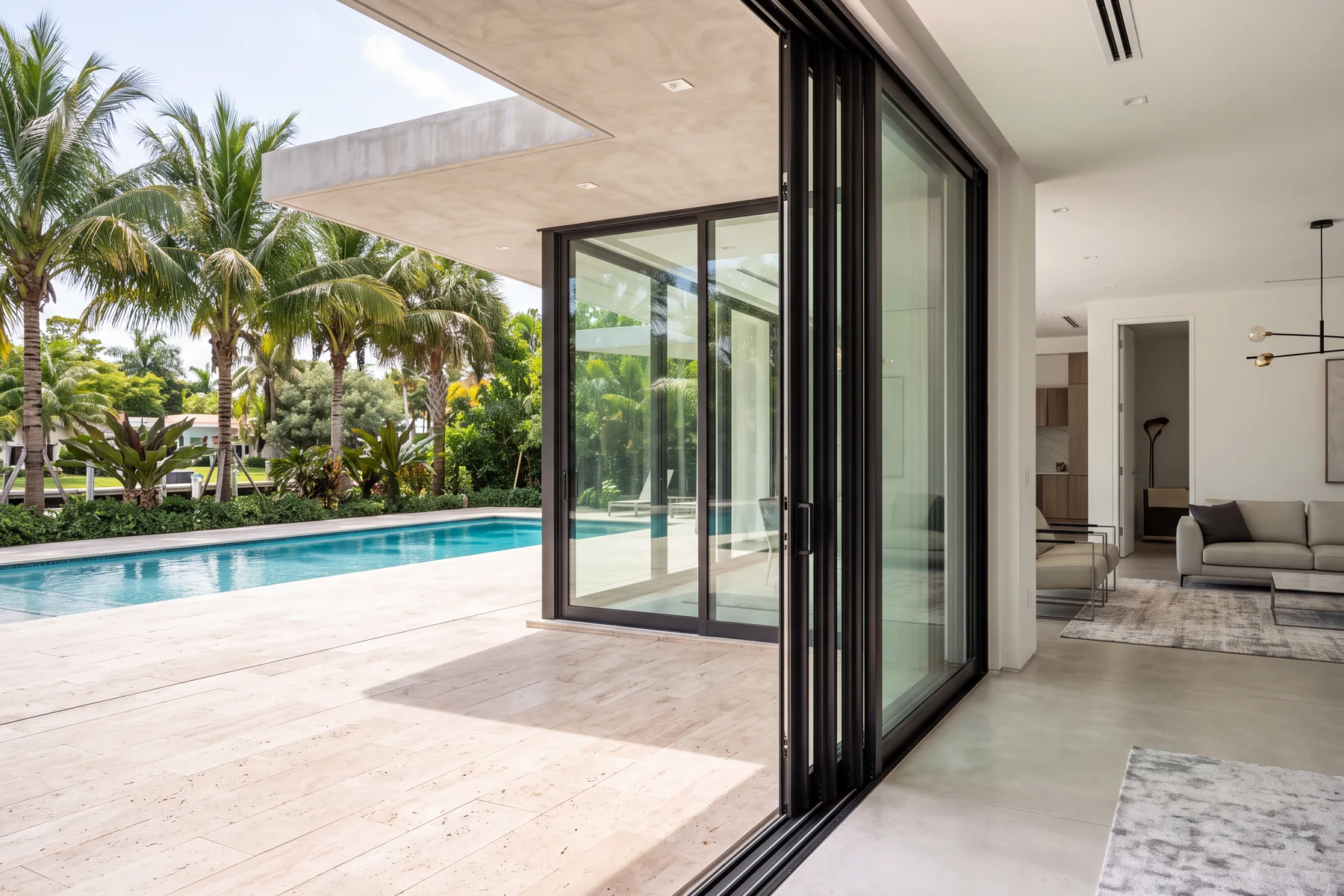

Which option fits your home?
Impact windows may be the better choice when:
- You want permanent protection
- You cannot safely install panels
- You travel during hurricane season
- Your existing windows need replacing anyway
- You want the year round security and noise benefits
- You would rather not store storm panels
Shutters may be the better choice when:
- Your existing windows are in good condition
- The initial budget is the main constraint
- You can deploy the system safely
- You have adequate storage space
- You do not mind preparing the house before each storm
The decision should come from the actual property, not from a generic sales pitch. If you want your openings looked at one by one, request a free estimate or call (561) 584-8485.
Questions to ask before you sign
Before signing a contract, ask:
- Is the proposed product approved for this application?
- What product approval number applies?
- What are its design pressure limits?
- Is it appropriate for the size of each opening?
- How will it be attached to the structure?
- Who is responsible for permits and inspections?
- What maintenance will be required?
- What warranties apply to the product and to the installation?
- Are the sliding glass doors and exterior doors included?
- What parts of the home will still need separate protection?
The National Hurricane Center recommends preparing before a hurricane threatens and understanding the hazards that can affect your family and property. Product selection belongs inside a complete plan, not in a last minute purchase.
Source: National Hurricane Center
Frequently asked questions
Shutters usually cost less up front, because you are not replacing the window assemblies. That is not the same as the lowest long term cost. Weigh maintenance, storage, the labor of putting them up before every storm and whether the existing windows will need replacing anyway for age, leakage or efficiency.
On an opening protected by an approved impact rated assembly, shutters are not normally added on top. The rule that does not change is that every exterior opening needs a defined protection plan, so any opening still holding original glass needs shutters or panels.
Yes. Phasing the work is common. Replace openings in stages and keep approved shutters on whatever has not been done yet.
Accordion shutters sit folded beside the opening when they are open, so they are visible from outside all year but they do not cover the glass. Removable storm panels are different: they darken the rooms for as long as they are up.
The building department with jurisdiction over your address, plus your condominium or homeowners association if you have one. Verify association approval before selecting any exterior system.