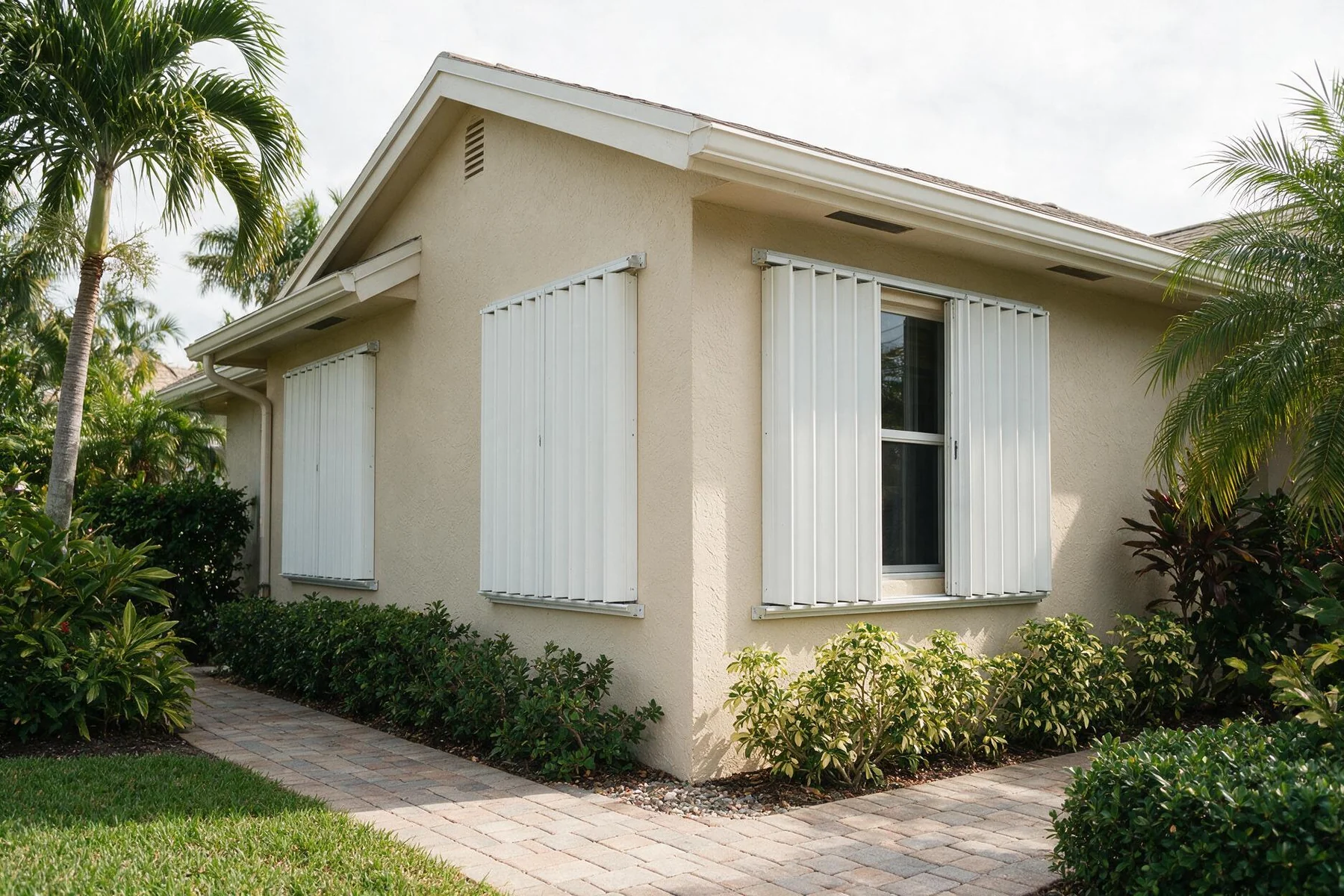
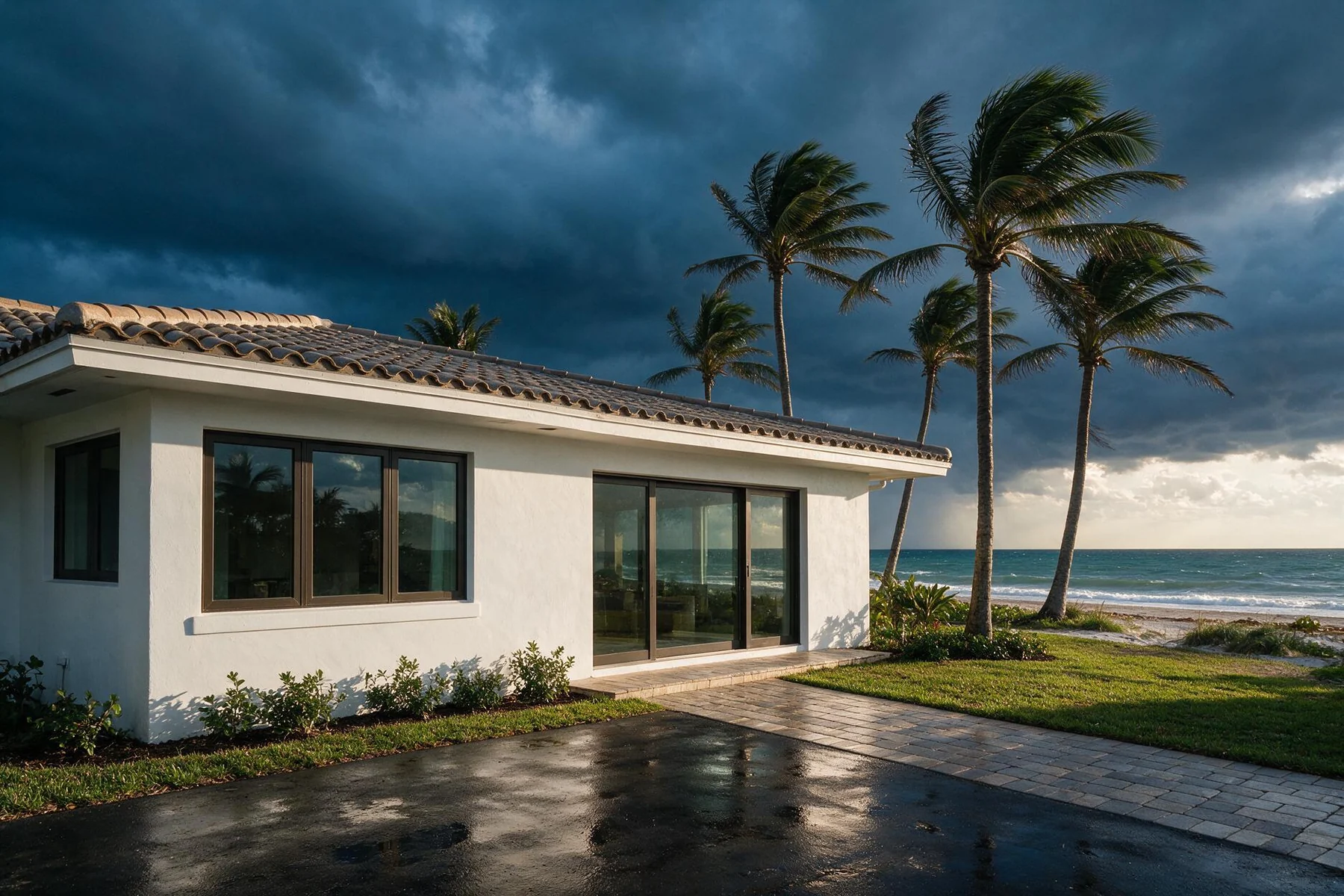

Hurricane preparation is part of owning a home in Palm Beach County. Families put together emergency supplies, check their evacuation zone and watch the forecast. The physical condition of the house deserves the same attention, and that starts with its windows, sliding glass doors and exterior doors.
Those openings are the parts of a home most exposed to high winds, flying debris and wind driven rain. Properly selected and professionally installed impact windows and impact doors stay in place all year, so nobody has to put up temporary panels every time a storm turns toward South Florida.
They are also widely misunderstood. Impact products are not unbreakable, they do not make a house hurricane proof, and the glass by itself is not the whole protection system.
Here is what a Palm Beach County homeowner should understand before buying.
Why windows and doors matter during a hurricane
Strong winds pick up loose objects and turn them into airborne debris. Roof tiles, tree limbs, patio furniture and leftover construction material can all reach a window or a door during a storm.
A conventional window can shatter and leave the opening exposed. Once that happens, wind and rain get inside more easily, and the pressure and water that follow can add damage to the interior and to the rest of the structure.
Palm Beach County hurricane planning guidance asks residents to prepare homes and businesses before a storm, and it covers protecting windows and using hurricane shutters. That work belongs on the calendar early in the season, not in the week when supplies, contractors and installation dates have already run out.

How impact resistant glass works
Most hurricane impact windows use laminated glass. The assembly bonds layers of glass around a durable interlayer.
When something hits hard enough, the glass can crack. That by itself does not mean the system failed.
The interlayer is designed to hold the broken glass together and reduce the chance that the opening is fully penetrated. It is the same principle that lets a cracked windshield stay in one piece instead of falling into the car.
The goal is not to promise that glass will never break. The goal is to keep a barrier over the opening while the storm passes.
That distinction matters. Any contractor who tells you impact windows cannot break is oversimplifying the product.
The frame matters as much as the glass
Homeowners tend to focus on the glass, but an impact window is a complete system:
- The glass
- The frame
- Reinforcement components
- Anchors and fasteners
- The method used to attach the unit to the structure
- The opening it is installed into
Strong glass set in an unsuitable frame does not give you what a tested impact resistant assembly gives you.
Florida’s product approval database shows whether a specific product is impact resistant, where it is allowed to be used and the design pressure limits attached to it. Homeowners and professionals can search it by manufacturer or by Florida approval number.
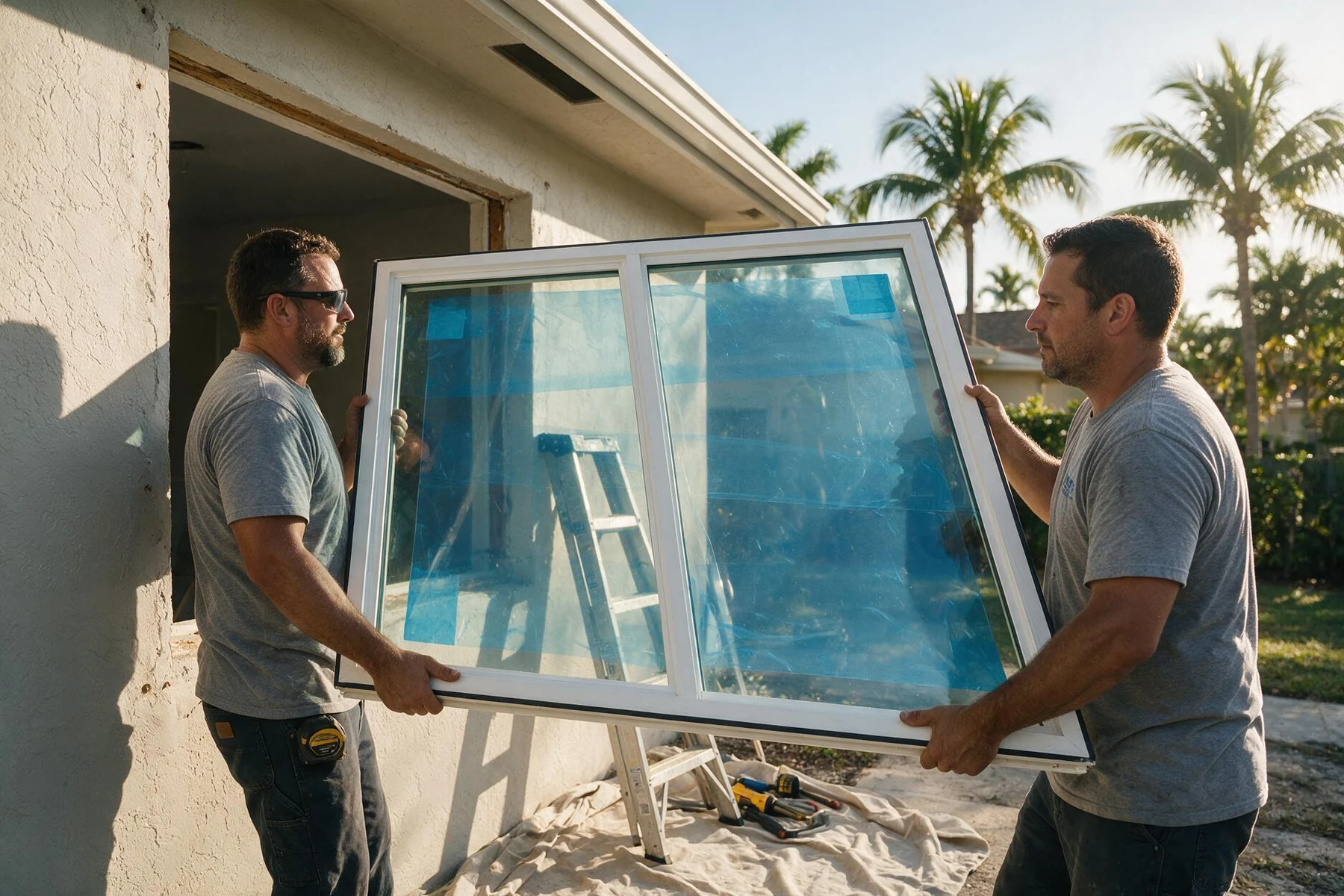
Why professional installation matters
An approved window can still perform poorly if it goes in wrong.
The installer has to evaluate the opening, follow the manufacturer’s approved installation instructions and use the right anchors, spacing and attachment method. The structure around the opening also has to be able to carry the new assembly.
Problems show up when:
- Openings are measured incorrectly
- The wrong fasteners are used
- Required anchors are missing
- The product is installed outside its approved limits
- Water management details are skipped
- The surrounding wall or substrate is damaged
That is why the installation company deserves as much scrutiny as the brand name printed on the window.
Impact windows compared with temporary storm protection
Temporary hurricane protection covers shutters, metal panels, fabric systems and other approved coverings.
Those systems can protect a home well when they are installed correctly before every storm. They also have to be stored, prepared and physically put up each time.
Impact windows stay in place year round. Nobody has to pull heavy panels out of a garage or cover each opening while the weather is already turning.
For a lot of homeowners that is the strongest argument for a permanent system, and it matters most for:
- Older adults
- Seasonal residents
- Owners of two story homes
- Families with a large number of windows
- Homeowners who travel often
- Anyone who cannot safely handle panels alone
The right answer depends on the property, the budget and the condition of the windows and doors that are already there. We break the choice down opening by opening in impact windows vs. hurricane shutters.
What about sliding glass doors and entry doors?
Replacing windows and leaving the large doors alone keeps some of the biggest openings in the house dependent on temporary protection.
Sliding glass doors are often the largest glazed opening in a Palm Beach County home. Entry doors, French doors, patio doors and the doors next to the garage belong in the same plan.
A complete evaluation should look at:
- Windows
- Sliding glass doors
- Entry doors
- French doors
- Sidelights
- Transoms
- Garage doors
- Any other exterior glazed opening
Not every opening has to be replaced at once. Every opening does need a clear answer for how it will be protected.

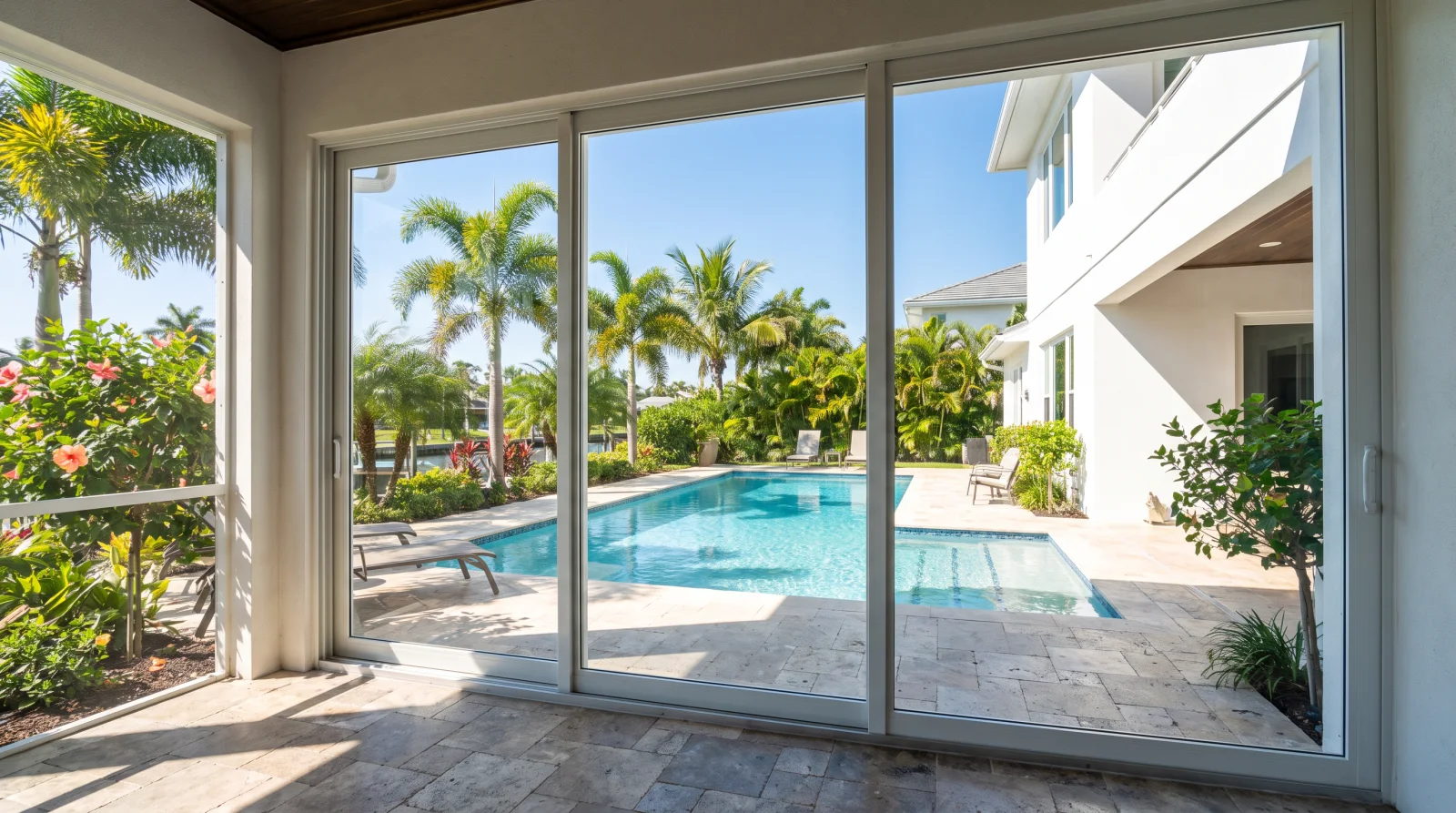
What impact windows do the rest of the year
Storm protection is usually the reason a homeowner starts looking at impact products, but they work on ordinary days too.
Depending on the glass package and the product design, that can include:
- Less outside noise
- More resistance to forced entry
- Better performance in everyday weather
- Reduced ultraviolet exposure inside the house
- Better energy performance than older windows
- No time spent putting up and taking down storm panels
Performance varies by product. Ask for the documentation instead of assuming every impact window delivers the same energy, sound or security numbers.
What impact windows cannot do
Impact windows address one specific vulnerability. They are one part of a hurricane plan, not the plan itself.
They cannot:
- Prevent every kind of storm damage
- Stop flooding or storm surge
- Guarantee that glass will never crack
- Protect a roof that is not up to the job
- Replace evacuation instructions
- Make it safe to stay in a mandatory evacuation zone
- Remove the need for insurance and emergency planning
The National Hurricane Center asks residents to understand hurricane hazards and take steps to protect their family and property before a storm is on the way.
Source: National Hurricane Center
How to tell what you already have
Plenty of homeowners are not sure whether their current windows are impact rated. Start with:
- Permanent labels or etched markings on the glass
- Manufacturer information on the frame
- Product approval or Notice of Acceptance documentation
- Permit records from the original installation
- Installation paperwork left by a previous owner
- Signs of damaged frames, loose components or water intrusion
Miami-Dade County keeps a searchable Product Control database of approved building envelope products, including windows, exterior doors, glazing and shutters. Read the approval document itself, because products carry conditions, limitations and expiration information, and the local authority having jurisdiction has to accept them.
Source: Miami-Dade Product Control Search
No contractor should call a window impact rated based on how it looks. Thick glass does not mean the whole system is approved for hurricane impact protection.
Do not wait until a storm is on the map
Replacing windows takes evaluation, measurements, product selection, permitting, manufacturing and installation. Each of those steps takes time.
Waiting for a named storm is not a protection strategy. Demand climbs, schedules fill and there is rarely enough time left to do the work properly.
The better approach is to evaluate the house during a quiet week and build the plan before it becomes urgent. If you want a second opinion on what you have now, request a free estimate or call (561) 584-8485.
Frequently asked questions
Opening protection requirements come from the Florida Building Code and from the building department with jurisdiction over your address. Impact rated products and approved shutters are both recognized ways to protect an opening, and what applies to a specific property depends on its location and on the scope of the permitted work. Confirm the requirement with the authority having jurisdiction before you buy.
Yes. Impact resistant is not the same as indestructible. Laminated glass can crack when it is struck. The interlayer is there to hold the broken glass together so the opening stays covered. A cracked unit should be evaluated by a professional and may need to be replaced.
No. Replacing in phases is common. What matters is knowing how every remaining opening will be protected in the meantime, including sliding glass doors and entry doors.
It depends on the number of openings, the products selected and the permitting and inspection schedule in your municipality. Manufacturing lead time and permitting usually drive the calendar, which is why starting outside of hurricane season gives the project the most room.
Yes. We review every opening, confirm product approvals and manage measurements, permitting and installation. ACG Glass & Metals is a Florida Certified Specialty Contractor, license SCC131154568.